
When the temperature drops in Florida and you still want something comforting, woodfire smoked pot roast makes a lot of sense. This cook started with one simple goal.
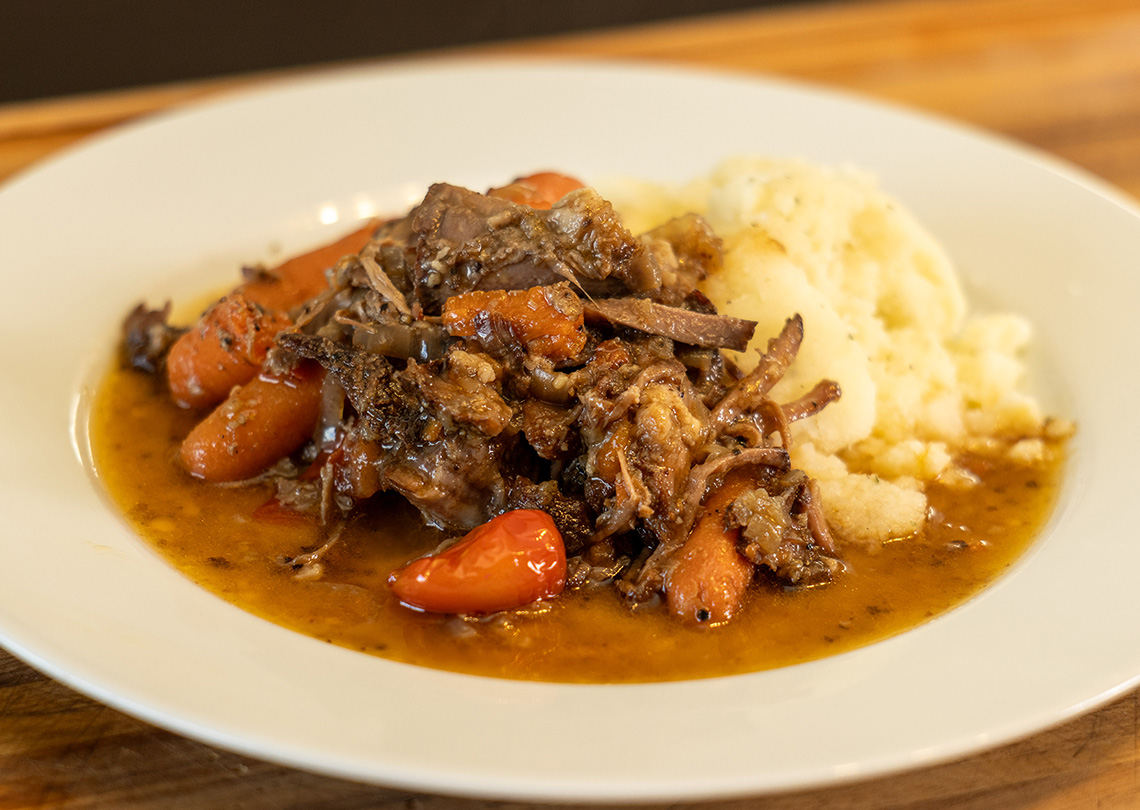
Make a deeply comforting meal without standing outside all day. What came out of the Ninja Woodfire was rich, smoky, and hands off for most of the cook.
This Page Contains Affiliate Links. For more Info See My Disclosures here.
This is the kind of meal that feels earned without being complicated, and it shows how the Woodfire can be used a little differently to get big flavor when the weather is not exactly cooperating.

Woodfire Smoked Pot Roast
Equipment
- Ninja Woodfire Grill
- Pellet hopper
- Probe thermometer or Ninja Woodfire app
- Large pan for making the broth
- Knife and cutting board
- Foil
- Cotton gloves with latex gloves over them for shredding
Ingredients
- 2.75 lb Chuck Roast
- 3 tablespoon Diamond Crystal Kosher Salt Estimated - Just enough for a light coasting.
- 2 tablespoon Smoked Paprika Estimated - Just enough for a light coasting.
- 2 tablespoon Dad Dust See Note for Recipe
- 2 tablespoon Ranch Seasoning Estimated - Just enough for a light coasting.
- 2 tablespoon Ground Black Pepper Estimated - Just enough for a light coasting.
- 2 tablespoon Worcestershire Sauce Estimated - Just enough rub on to help the spices stick if needed.
Gravy and Braising Liquid
- 1 White Onion Sliced (Reserve ⅓ for later)
- 1 Red Onion Sliced (Reserve ⅓ for later)
- 5 Cloves Garlic
- 3 tablespoon Unsalted Butter
- 1 tablespoon Avocado Oil
- 1 teaspoon Salt
- 32 OZ Beef Broth Boxed
- 1 Packet Gelatin Powder
Vegetables Added During Braise
- 2 Cups Baby Carrots
- 2 Cups Cherry Tomatoes
- Remaining Sliced Onions
Instructions
Season the Chuck Roast
- Start with a 2.75 pound chuck roast. Season all sides generously with Diamond Crystal kosher salt. Add smoked paprika for color, then season with Dad Dust. Lightly add ranch seasoning. Finish with 16 mesh black pepper. On the presentation side, add Worcestershire sauce to help the seasoning stick. Season the sides with Dad Dust, ranch seasoning, and black pepper.
Cold Smoke
- Load the Ninja Woodfire with smoke and pecan shell pellets. Give the pellet hopper a good shake. Set the grill to cold smoke and place the roast inside. Cold smoke for 1 hour.
- Make the Broth While Smoking
- Slice one white onion and one red onion. Roughly chop the elephant garlic. Heat a pan over medium heat and add butter and oil. Add about two thirds of the onions and all of the garlic. Cook for 3 to 4 minutes until softened. Season lightly with salt. Pour in 32 ounces of beef broth. Add one packet of gelatin powder. Simmer on low for 20 to 30 minutes, then set aside.
Cook to 165°F (74°C)
- After the cold smoke, top off the pellet hopper. Insert a probe into the roast. Set the Ninja Woodfire to thermometer cook at Cook to 165°F (74°C) with a grill temperature of 225°F (107°C). Cook until the roast reaches 165°F (74°C) internally, about 3 hours.
Braise
- Pour the prepared broth over the roast. Add cherry tomatoes, baby carrots, and the remaining onions. Cover tightly with foil. Return to the Woodfire at 300°F (149°C) until the roast reaches around 195°F (91°C), about 1 hour.
Finish with Vegetables
- Once 195°F (91°C) is reached, add the carrots and onions if not already added. After 30 minutes, add the cherry tomatoes. Increase the grill temperature to 350°F (177°C) and cook for about 1 more hour.
Shred
- The roast finishes around 211°F to 215°F (99°C to 102°C). Remove and shred using cotton gloves with latex gloves over them.
Serve
- Serve shredded pot roast with the vegetables and broth.
Video
Notes
- 120G Granulated Garlic
- 120G Granulated Onion
- 1 tablespoon MSG
- Place all the items in a shaker and mix well.
Nutrition
 Tried this recipe?Mention @DadGotThis or tag #DadGotThis!
One of the most interesting things about this woodfire smoked pot roast is how it leans into the strengths of the Ninja Woodfire instead of fighting them. The cook starts with a one hour cold smoke. That single decision sets the tone for the entire meal. The cold smoke builds a smoky foundation early and gives the beef a head start on flavor before any heat is applied. This approach addresses one of the most common criticisms people have about the Woodfire and turns it into an advantage. Instead of chasing heavy smoke later, the smoke is layered in right at the beginning.
Another standout element is the cut of meat. Chuck roast is used here because of its fat and connective tissue. As it cooks, all of that breaks down and feeds directly into the final texture and the gravy. This is not a delicate roast. It is built for long cooks and rewards patience. By the time the meat finishes, it is fully shreddable and loaded with flavor from every stage of the process. The final internal temperature pushes past two hundred degrees Fahrenheit, which is sometimes necessary for chuck roast to fully relax and pull apart properly.
Why Woodfire Smoked Pot Roast Works So Well
What really makes this woodfire smoked pot roast different is how the flavors are layered without overthinking anything. The seasoning is straightforward and built for balance. Salt goes on first and it looks like a lot, but that is intentional. Much of it ends up washing down into the gravy later. Smoked paprika is used mainly for color, which gives the exterior a deeper and more appetizing look as the roast cooks. Dad Dust brings onion, garlic, and a hint of MSG into the mix, while ranch seasoning adds a subtle background note that ends up blending into the final sauce.
Black pepper is applied with the goal of helping build bark. Worcestershire sauce is used on the presentation side to help the seasoning stick. None of this is fussy. It is done by feel and adjusted on the fly, which fits the overall tone of the cook. The end result is a roast that looks good coming off the smoker and tastes even better once it is braised.
While the roast is cold smoking, attention shifts to the broth. This is where a basic box stock is turned into something far more satisfying. White onion, red onion, and elephant garlic are cooked gently in butter and oil until softened. A little salt helps everything break down more easily. Beef broth goes in next, followed by a packet of gelatin powder. This single addition makes a huge difference. Gelatin mimics what would normally come from bones and cartilage in a homemade stock, and it gives the gravy body and richness without needing anything fancy.
After simmering, this broth becomes the backbone of the dish. Once the roast hits the mid one hundreds internally, it is time to braise. The broth is poured in, and the cook transitions from smoke to tenderness. Covered and cooking at three hundred degrees Fahrenheit, the roast slowly pushes toward the texture everyone is looking for.
Why Woodfire Smoked Pot Roast Is Perfect for Cold Weather
There is something about woodfire smoked pot roast that just fits cold weather cooking. Even in a place like Florida, a sudden cold snap can change what sounds good for dinner. This is not a light meal. It is rich, warm, and deeply satisfying. It also does not require standing outside the entire time. Most of the cook is hands off, which makes it practical even when the weather is not ideal.
As the braise continues, vegetables are added in stages. Baby carrots, onions, and cherry tomatoes go into the pot at different points so they contribute flavor without completely disappearing. The onions bring sweetness and depth. The carrots add a subtle sweetness of their own. The tomatoes bring a light acidity that balances the richness of the beef and broth. Even when the carrots go a little longer than planned, they still contribute positively to the final dish.
The final stretch of the cook pushes the temperature higher to get everything finished. By the time the roast is ready to shred, it has absorbed smoke, seasoning, and broth from every phase. Shredding is done by hand using cotton gloves with latex gloves over them, which makes it easier to handle the hot meat safely. Once pulled apart, the beef is surrounded by a gravy that tastes oniony, tomato forward, and slightly sweet from the carrots.
This is the kind of meal that rewards time rather than effort. It takes hours, but very little of that time is active. The Ninja Woodfire does the heavy lifting, and the method plays to its strengths instead of trying to force it into being something else. The result is not a replacement for a full size smoker, but it does not need to be. It lands in that eighty five to ninety percent range with far less work, which is exactly why it works so well for weeknight cooks and comfort food alike.
In the end, this cook shows how thoughtful use of smoke, temperature, and timing can turn simple ingredients into something special. Woodfire smoked pot roast delivers comfort, flavor, and practicality in one package. It is not complicated, it is not fussy, and it is absolutely worth the time it takes to make.
Ingredient and Equipment Links:
Use Dad's Affiliate Link & get your own Ninja Woodfire Pro Connect Outdoor Grill:
https://ninjakitchen.pxf.io/k0JNLN
Ninja Woodfire Grill Griddle:
https://amzn.to/3S2Dpnd
Smokin Pecans Pellets:
https://amzn.to/3LiZx9i
Raised Grates for Ninja Woodfire:
https://amzn.to/3LjweU2
Did you know Dad is on YouTube?
Go check out Dad's youtube channel for all kinds of great cooking videos and food-related content.
Leave a Reply