
If you have ever struggled with dry pork, this Woodfire Pork Tenderloin flips that problem on its head. This cook takes a cut that is usually lean and unforgiving and turns it into something incredibly juicy, tender, and packed with flavor.
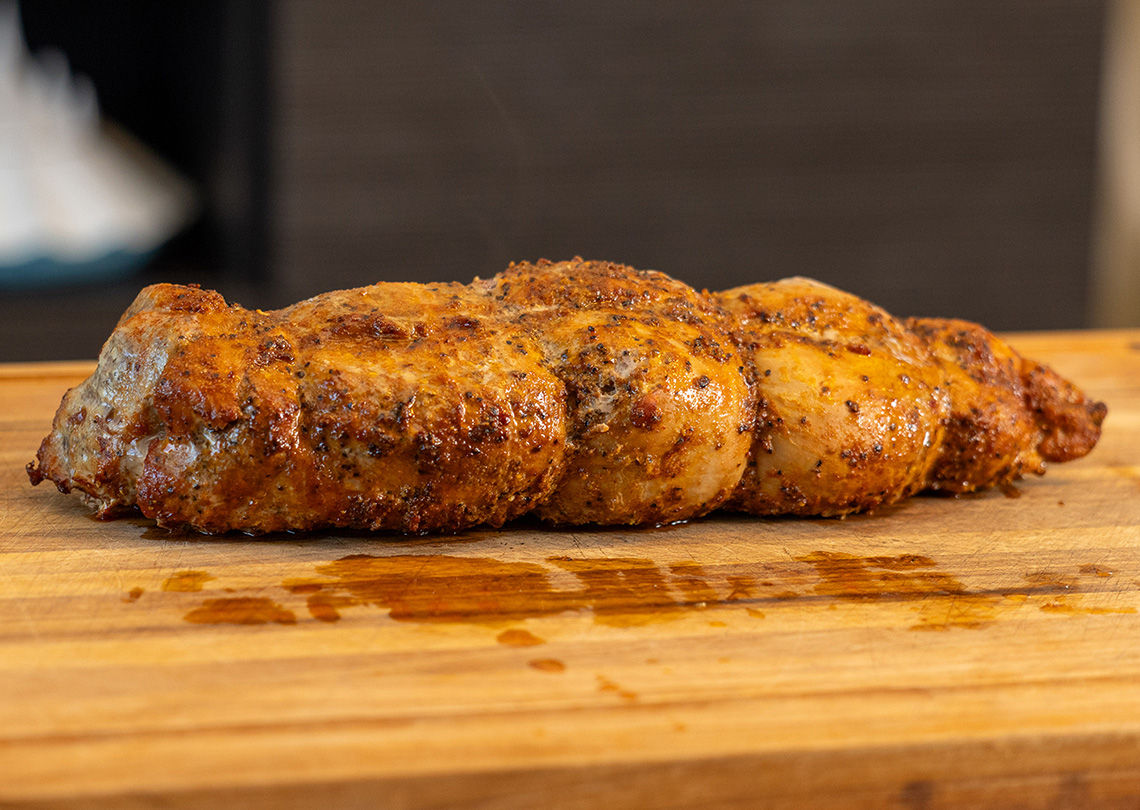
It is all about smart prep, simple seasoning, and using the Woodfire the right way to build flavor without overcooking.
This Page Contains Affiliate Links. For more Info See My Disclosures here.
Woodfire Pork Tenderloin
Equipment
- Ninja Woodfire or other Smoker
- Knife
- Butcher's twine
- Mixing bowl
- Injector
- Temperature Probe
- Elevated Rack
Ingredients
- 3 LBS Pork Tenderloins 2 1.5lb Tenderloins
- 1 tablespoon Diamond Crystal Kosher Salt Estimated (get a light coating)
- 1 tablespoon Granulated Onion Estimated (get a light coating)
- 1 tablespoon Granulated Garlic Estimated (get a light coating)
- 1 tablespoon Umami Mushroom Powder Estimated (get a light coating)
- 1 tablespoon Smoked Paprika Estimated (get a light coating)
- 1 tablespoon Black Pepper Estimated (get a light coating)
Injection
- ½ Cup Unsalted Butter 1 Stick
- 1 teaspoon Additional Salt
- 1 teaspoon Umami Mushroom Powder
- ¼ teaspoon Ginger Estimated (get a light coating)
Instructions
- Prep And Season The Pork
- Tie the pork tenderloins together into one thicker roast. Trim off any visible silver skin. Season the inside with Diamond Crystal kosher salt, then add granulated onion, granulated garlic, umami mushroom powder, a small amount of ginger, and smoked paprika. Tie the pork together tightly using butcher’s twine, then season the outside with the same ingredients, adding black pepper.
- Make And Inject The Butter Mixture
- Melt a full stick of unsalted butter and add a pinch of salt, about a teaspoon of umami mushroom powder, and about a quarter teaspoon of ginger. Use an injector to inject the mixture throughout the pork tenderloin.
- Let it Marinate
- Place the pork in the refrigerator for at least 1 to 2 hours, or overnight for best results. 
- Smoke The Pork
- Fill the pellet hopper on the Woodfire with smoke and pecan pellets and give it the “Dad Shake.” Place the pork on an elevated rack in the Ninja Woodfire. Cold smoke for 20 minutes. Insert a temperature probe into the center of the meat and continue cooking at a low temperature setting around 200°F (93°C), noting it cooks hotter similar to about 250°F (121°C)in a conventional smoker. Cook until the internal temperature approaches 135°F (57°C).
- Finish And Broil
- Once the pork reaches around 135°F (57°C), check the crust. If needed, switch to broil for about 2 to 3 minutes to develop additional color. The pork should finish around 140°F (60°C) before resting.
- Rest And Slice
- Remove the pork and let it rest for about 15 to 20 minutes until it reaches a final temperature around 145°F (63°C). Remove the twine, slice down the middle, and serve.
Video
Nutrition
 Tried this recipe?Mention @DadGotThis or tag #DadGotThis!
Right out of the gate, this is not just throwing a tenderloin on the grill and hoping for the best. The approach here changes how the meat cooks and how it eats. Instead of treating each tenderloin as its own piece, they get tied together into a thicker roast. That one move alone helps control the cook and keeps everything more even from edge to center.
Why Woodfire Pork Tenderloin Works So Well
The biggest reason this Woodfire Pork Tenderloin stands out is how it handles moisture. Pork tenderloin does not have a lot of fat to protect it, so if you miss your timing even a little, it dries out fast. This method solves that problem before the cook even starts.
First, you get seasoning inside the meat, not just on the surface. Because the tenderloins are opened up before tying, you can season the interior. That means every slice has flavor, not just the outside. You are building layers instead of relying on a crust to carry everything.
Then comes the injection. This is where things get interesting. A full stick of melted butter gets combined with umami mushroom powder, a little ginger, and salt. That mixture gets injected throughout the pork. Now instead of hoping the meat stays juicy, you are actively putting moisture and flavor exactly where it needs to be.
This is the kind of move that takes a lean cut and gives it insurance. Even if you push the cook a little too far, you still end up with something that stays tender and juicy.
The seasoning itself keeps things simple but effective. Granulated onion, granulated garlic, umami mushroom powder, ginger, smoked paprika, and black pepper all work together to create a balanced flavor. Nothing is overpowering, but everything plays a role.
Woodfire Pork Tenderloin Builds Flavor Without Overdoing It
One of the smartest parts of this Woodfire Pork Tenderloin is how the smoke is handled. Instead of blasting it with heavy heat right away, it starts with a cold smoke. That gives the meat time to take on smoke flavor without cooking too quickly.
Using smoke and pecan pellets keeps the flavor clean. It adds depth without getting bitter, even when running heavier smoke. That matters because tenderloin does not need aggressive smoke. It needs just enough to enhance what is already there.
The elevated rack also plays a role here. By lifting the meat, you allow smoke to circulate all the way around it. That helps build a more even flavor instead of having one side dominate.
Another key detail is understanding how the Woodfire cooks. Even when set lower, it runs hotter than expected. That means you are effectively cooking at a higher temperature than the display suggests. Instead of fighting that, the method leans into it and uses temperature targets to stay in control.
Setting a probe alert around 135°F gives you a checkpoint. It lets you decide if you want to push for more crust or move toward finishing. That flexibility is what keeps the cook from going sideways.
Woodfire Pork Tenderloin Finishes With Perfect Texture
Texture is where this Woodfire Pork Tenderloin really delivers. The goal is not just cooked pork. The goal is tender, juicy slices that hold together and still have structure.
Once the pork hits around 135°F, you get the option to add a quick broil. This is a short step, just a couple of minutes, but it makes a difference. It adds a little color and texture to the outside without drying anything out.
From there, it is all about the rest. Pulling the pork around 140°F and letting it rest up to about 145°F is what keeps it juicy. That rest period allows everything to settle and redistribute so you do not lose moisture when slicing.
When you cut into it, you can see the payoff. The slices are clean, the inside is juicy, and the texture is exactly where it should be. Not mushy, not dry, just right.
And the flavor follows through. The butter injection keeps every bite rich and moist. The seasoning gives it depth. The smoke adds just enough background to remind you how it was cooked.
Why This Woodfire Pork Tenderloin Is Worth Making
This Woodfire Pork Tenderloin works because it solves the biggest problem people have with this cut. It takes away the guesswork and replaces it with control.
You are not relying on luck. You are using techniques that directly impact the final result. Injecting moisture, controlling thickness, managing temperature, and finishing with intention all come together to create something that feels dialed in.
It also stays approachable. Nothing here is complicated. Every step has a purpose, and every tool used makes sense for the outcome.
At the end of the day, this is a great example of how small changes can make a big difference. You take a simple ingredient, apply a few smart techniques, and end up with something that feels like a completely different dish.
If you have been burned by dry tenderloin before, this is the method that fixes it.
Ingredient and Equipment Links:
Use Dad's Affiliate Link & get your own Ninja Woodfire Pro Connect Outdoor Grill:
https://ninjakitchen.pxf.io/k0JNLN
Ninja Woodfire Grill Griddle:
https://amzn.to/3S2Dpnd
Smokin Pecans Pellets:
https://amzn.to/3LiZx9i
Raised Grates for Ninja Woodfire:
https://amzn.to/3LjweU2
Did you know Dad is on YouTube?
Go check out Dad's youtube channel for all kinds of great cooking videos and food-related content.

Leave a Reply