
Craving an authentic New Orleans po'boy but nowhere near Louisiana? That is exactly where this recipe starts, and honestly, that is what makes it fun. Instead of guessing, winging it, or trying to "elevate" something that does not need it, this one goes straight to the source.
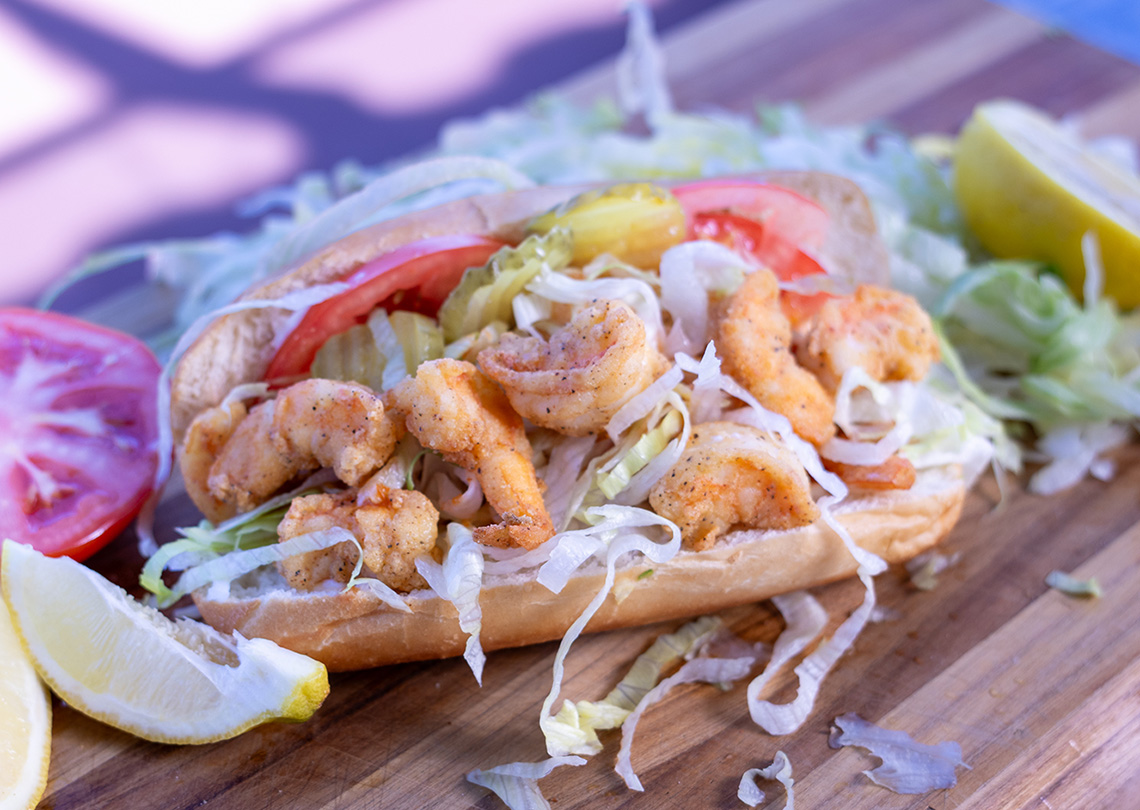
A real New Orleans chef gives the blueprint, and the goal becomes simple. Do it right, or do not do it at all.
This Page Contains Affiliate Links. For more Info See My Disclosures here.
Equipment
- Deep Fryer
- Paper towels
- Knife
- Toaster
Ingredients
- 1 lb Medium Shrimp
- 1 Bag Louisiana Fish Fry With Lemon
- 2 tablespoon Slap Ya Mama Seasoning
- 1 Beefsteak Tomato
- 1 Cup Iceberg Lettuce
- 1 Vietnamese Banh Mi Roll
- Mayonaise
- Dill Pickle Chips
- Hot Sauce Optional
- Neutral Flavor Oil (like Canola) Enough for Frying
Instructions
Prep The Shrimp:
- Peel and devein the shrimp if needed. If the shrimp are too large, cut them in half to make them closer to the right size for the po boy.
Preheat Oil
Prep The Toppings:
- Set your deep fryer to 350F(177C) and let it preheat. You can also put oil in a pan and shallow fry. If doing that put your pan on with the oil to preheat.
- Slice the beefsteak tomato. Shred the iceberg lettuce.
Toast the Roll
- Put the roll in a toaster or air fryer and toast until the outside is just a bit crispy. Should only take a few minutes at 350F(177C)
Bread The Shrimp:
- Pour the Louisiana Fish Fry With Lemon into a container. Add as much Slap Ya Mama seasoning as you want. Coat the shrimp in the breading.
Deep Fry The Shrimp:
- Add the breaded shrimp and cook for a few minutes, until they float and turn golden brown. When they float is a good sign to check them.
Drain The Shrimp:
- Remove the shrimp and place them on paper towels to absorb extra oil.
Build The Po Boy:
- Slice the roll and add mayo to both sides. Then add your tomato slices. Add the fried shrimp and top with the shredded iceberg lettuce. You can squeeze a lemon over it and add hot sauce if you like.
Nutrition
 Tried this recipe?Mention @DadGotThis or tag #DadGotThis!
Right away, there is a tension that makes this cook interesting. On one hand, you want authenticity. On the other, you are working in your own kitchen, not standing in a corner shop in New Orleans. That is where the small decisions start to matter. For example, even something as basic as shrimp size gets attention. Medium shrimp is the call, but if yours are bigger, you adjust. Cut them down, make them work, keep moving. That mindset carries through the entire cook.
Authentic New Orleans Po'Boy Starts With Trusting the Source
Calling something authentic on the internet is risky. Everyone has an opinion, and someone is always ready to tell you why you are wrong. However, this approach cuts through that noise. Instead of guessing, it leans on direct guidance from someone who actually knows what they are talking about.
That decision shapes everything. The breading is not complicated, and that is the point. There is no long ingredient list or secret blend. You use exactly what was recommended. Louisiana Fish Fry with lemon, specifically that one, and Slap Ya Mama seasoning. That is it. No substitutions, no overthinking, no trying to reinvent something that already works.
Because of that, the focus shifts from "what should I add" to "am I doing this correctly." That is a big difference. It keeps the process simple, and more importantly, it keeps the result true to what it is supposed to be.
At the same time, the supporting ingredients follow the same philosophy. A beefsteak tomato and thinly shredded iceberg lettuce. Nothing fancy, nothing unnecessary. Just the components that belong there.
The Bread Makes or Breaks an Authentic New Orleans Po'Boy
Then comes the part that surprises a lot of people. The bread.
This is where things could easily go off track. It looks simple, but it is not. It is not just any roll, and it is definitely not interchangeable with whatever you have lying around. The bread is its own thing, and getting it right changes everything.
Instead of trying to fake it with something close, the solution here is practical. Go find a Vietnamese banh mi roll. That recommendation comes straight from someone who knows the dish, and it solves the problem in a way that actually works. The texture, the structure, and the way it holds everything together all line up in a way that makes sense.
Even better, it is accessible. If you have a Vietnamese spot nearby, you can just ask to buy the bread. It is simple, affordable, and it gets you closer to the real deal without overcomplicating anything.
From there, a quick toast adds another layer. A little crisp on the outside while keeping the inside soft. That contrast matters. It sets up the sandwich so everything else can shine.
Testing the Woodfire Against the Real Method
Now this is where things get interesting.
Instead of just making one version and calling it a day, this cook turns into a side by side test. One version sticks to the traditional method. The other tries to make it work in the Ninja Woodfire. Same shrimp, same breading, same setup. Different cooking approach.
At first, it seems like it could work. The Woodfire runs at 400 degrees on air fry with Woodfire mode on. There is attention to detail here too. Giving the shrimp space so air can circulate. Adding oil with a mister to help mimic that fried texture. Flipping, checking, adjusting.
However, the results tell the story.
The deep fried version hits exactly what you want. Golden brown, crisp, and visually right. You know it when you see it. It looks like it belongs in that sandwich.
Meanwhile, the Woodfire version struggles to get there. It develops some color, but not enough. The texture is not quite right. It is not bad, but it is not what it should be either. That is an important distinction. Good enough is not the goal here.
Because of that, the conclusion becomes clear. This is not the right tool for this job. Not every method works for every dish, and this is one of those times where tradition wins for a reason.
Why Doing It Right Matters
At the end of the day, this is what makes this recipe stand out.
It is not about adding more. It is not about making it fancy. It is about respecting what the dish is supposed to be. Every choice supports that idea, from the shrimp size adjustment to the exact breading mix, all the way to choosing the right cooking method.
The contrast between the two cooking approaches reinforces that lesson. You can try to shortcut or adapt, but sometimes the best move is to stick with what works. In this case, that means frying the shrimp the way it is meant to be done.
Even with that, there is still room for experimentation, and that is part of the fun. Testing the Woodfire version shows what happens when you try something different. It gives you a clear answer instead of a guess.
Finally, when everything comes together the right way, the result speaks for itself. The sandwich does not last long. That is always a good sign. It means you did something right.
So if you are chasing an authentic New Orleans po'boy, the path is simple. Use what was recommended, follow the method that works, and do not overthink it. Sometimes the best cooking move is knowing when not to get creative.
Ingredient and Equipment Links:
Use Dad's Affiliate Link & get your own Ninja Woodfire Pro Connect Outdoor Grill:
https://ninjakitchen.pxf.io/k0JNLN
Ninja Woodfire Grill Griddle:
https://amzn.to/3S2Dpnd
Smokin Pecans Pellets:
https://amzn.to/3LiZx9i
Raised Grates for Ninja Woodfire:
https://amzn.to/3LjweU2
Did you know Dad is on YouTube?
Go check out Dad's youtube channel for all kinds of great cooking videos and food-related content.
Emma Watson says
It's really interesting how this recipe emphasizes doing it 'right' and going 'straight to the source' for an authentic New Orleans po'boy, even specifying a Vietnamese Banh Mi Roll for the bread. That dedication to specific details makes recreating the experience at home feel like a fun challenge, much like diving into a new game or puzzle on a site such as sz games.
Emma Watson says
This recipe sounds absolutely delicious, and I really appreciate the dedication to authenticity, especially by recommending specific brands like Louisiana Fish Fry and Slap Ya Mama seasoning. It’s a great touch that truly promises that classic New Orleans flavor right from your own kitchen, even if you're far from Louisiana.
Olivia Taylor says
This recipe's dedication to authenticity, even for a home cook, is truly inspiring. I particularly appreciate the instruction to use a Vietnamese Banh Mi roll, which really highlights the diverse culinary influences that make a po'boy so unique.