
Chuck Roast Burnt Ends are smoky, tender, saucy, and a whole lot cheaper than starting with brisket point.
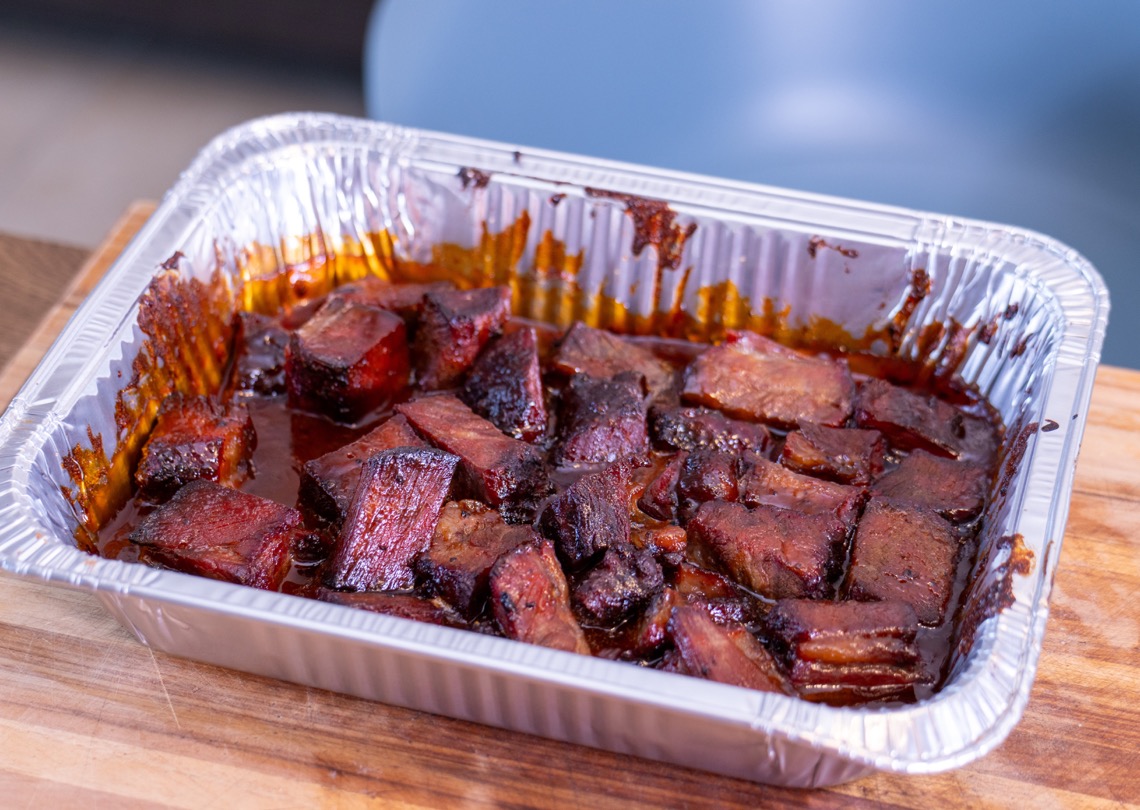
This cook turns one substantial chuck roast into bite sized pieces with real bark, plenty of smoke, and a glossy barbecue finish. Dad made them during the first real cook on the Kamado Joe Konnected Joe, which also made the recipe a useful test of just how easy a digitally controlled charcoal grill can be.
The Konnected Joe combines the flavor and familiar ceramic construction of a kamado cooker with an automatic fire starter, temperature control, a fan, and app monitoring. That means this was not only about making a pan of excellent beef. It was also about seeing whether charcoal cooking could feel as convenient as using a digitally controlled pellet grill.
The answer was pretty clear. After the grill was set, the chuck roast cooked for hours with almost no attention. Dad checked the app, watched the temperatures, and let the grill do its thing. By the end, he called it one of the easiest cooks he had ever done. The finished beef still had the smoke, bark, and texture that make this style of barbecue worth the wait.
This Page Contains Affiliate Links. For more Info See My Disclosures here.
Chuck Roast Burnt Ends
Equipment
- Kamado Joe Konnected Joe Or Kamado Grill
- Grill Expander Rack
- Temperature Probe
- Water Pan
- Aluminum Foil
- Disposable Aluminum Pan
- Knife
Ingredients
Chuck Roast And Seasoning
- 3.5 LB Chuck Roast 3 ½ pounds
- 2 tablespoon Yellow Mustard (Estimated)
- 1 tablespoon Salt (Estimated)
- 2 tablespoon Black Pepper, 16 Mesh (Estimated)
- 2 tablespoon Dad Dust (Estimated) See Note for Recipe
Finishing Sauce
- 3 tablespoon Brown Sugar
- 15.5 OZ Kinder's BBQ Sauce 1 Bottle
Instructions
Prepare The Chuck Roast
- Coat the chuck roast with 2 tablespoons of mustard.3.5 LB Chuck Roast, 2 TBSP Yellow Mustard
- Season it with salt, 16 mesh black pepper, and Dad Dust. Repeat on the other side and season the edges.1 TBSP Salt, 2 TBSP Black Pepper, 16 Mesh, 2 TBSP Dad Dust
- Refrigerate the seasoned roast while setting up the grill.3.5 LB Chuck Roast
Set Up The Kamado
- Clear the old ash into the ash drawer, then load the grill with charcoal and several large chunks of apple wood.
- Install the grill expander rack to move the meat farther from the heat. Place a water pan underneath the cooking position.
- Light the grill and set it to 275°F (135°C).
- Put the chuck roast on the expander rack, insert the temperature probe, and close the lid.3.5 LB Chuck Roast
Smoke And Build The Bark
- Smoke the roast at 275°F (135°C). After about two and a half hours, check its color and bark.3.5 LB Chuck Roast
- When the probe reads 155°F (68°C), remove the water pan to encourage more bark development.3.5 LB Chuck Roast
- Just shy of five hours, when the roast has reached the stall and the bark looks better, place the roast in a foil boat.3.5 LB Chuck Roast
- Continue cooking until the internal temperature reaches 195°F (91°C).3.5 LB Chuck Roast
Make The Burnt Ends
- Remove the roast and let it rest for 10 minutes.3.5 LB Chuck Roast
- Cut the roast into cubes and place them in a disposable aluminum pan.3.5 LB Chuck Roast
- Add a couple spoonfuls of brown sugar and one 15.5 ounce bottle of Kinder's BBQ Sauce. Toss thoroughly to coat every piece.3 TBSP Brown Sugar, 15.5 OZ Kinder's BBQ Sauce
- Return the pan to the grill for about one hour, until the sauce has set and the burnt ends look finished.3.5 LB Chuck Roast, 3 TBSP Brown Sugar, 15.5 OZ Kinder's BBQ Sauce
Video
Notes
- 120G Granulated Garlic
- 120G Granulated Onion
- 1 tablespoon MSG
Nutrition
 Tried this recipe?Mention @DadGotThis or tag #DadGotThis!
Why Chuck Roast Burnt Ends Make So Much Sense
Traditional burnt ends are associated with brisket point, but chuck roast offers a practical alternative. It is thick enough for a long cook, has enough fat and connective tissue to become tender, and can develop a dark exterior before being cut into cubes. In the video, Dad summed up the finished result as smoky, tender, saucy, and cheap. That is a strong argument for poor man's burnt ends.
It did. About two and a half hours into the cook, the roast had picked up a pink color around the edges. The bark was still lighter than Dad wanted, so the water pan came out when the probe was reading 155°F (68°C). Later, as the meat reached the stall, the exterior looked much better and had developed the bark he was after.
Chuck Roast Burnt Ends Need Bark Before Sauce
Sauce can make beef look finished before the texture is actually there. That is why the bark matters. The roast spent the first part of the cook elevated on a grill expander rack, with apple wood providing smoke and a water pan sitting below. The extra distance from the heat helped keep the cook gentle while the outside developed color.
Once the roast reached the stall, Dad used a foil boat instead of wrapping it completely. The foil supported the bottom while leaving the top exposed. That allowed the bark to keep developing instead of steaming inside a full wrap. When the internal temperature reached 195°F (91°C), the roast came off looking dark, beefy, and properly barky.
The seasoning stayed simple enough to let the smoke and beef do the work. Two tablespoons of mustard helped the salt, 16 mesh black pepper, and Dad Dust stick to the surface. Dad Dust is an equal mixture of granulated garlic and granulated onion with a pinch of MSG. It is Dad's all purpose seasoning and fits naturally with a straightforward barbecue cook like this one.
The Saucy Finish Changes Everything
After a ten minute rest, the chuck roast was cut into cubes and coated with a couple spoonfuls of brown sugar and one bottle of Kinder's barbecue sauce. The coated pieces went back onto the grill for about an hour.
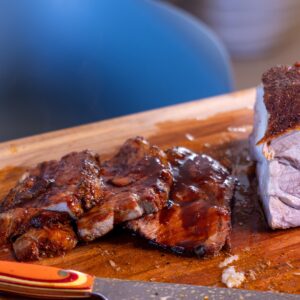
That final time on the heat turned the loose coating into a glossy finish. The edges darkened, the sauce clung to the beef, and the cubes took on the sticky appearance people expect from burnt ends. More importantly, the inside stayed tender while the outside kept enough structure to make each piece feel substantial.
Charcoal Cooking in Easy Mode
The Konnected Joe was almost a second character in this cook. Dad loaded the charcoal, added large chunks of apple wood, set the target temperature, pressed the automatic fire starter button, and monitored the cook through the app. The grill also guided the vent setting, which removes some of the uncertainty that can make a traditional kamado intimidating for a new owner.
The app connected without trouble and showed both the grill temperature and the food probe temperature. Dad did find one limitation. He wanted a custom probe alert at 165°F (74°C) before the final target of 195°F (91°C), but the app did not provide a simple way to set both alerts on one probe. A second probe could work as a workaround, although that would mean putting another hole in the meat.
Even with that complaint, the convenience was real. Dad could leave the grill running while he picked up his daughter from school, then return about an hour later to a pan that looked perfect. That is exactly the kind of situation where automatic temperature control earns its place.
Are Chuck Roast Burnt Ends Worth the Wait?
Absolutely. The long cook gives an affordable cut time to become tender, while the foil boat protects the bottom without sacrificing the bark on top. Apple wood adds smoke, and the brown sugar and barbecue sauce provide the sticky finish that pushes the cubes firmly into burnt end territory.
The cook also proved that convenience does not have to erase the charcoal experience. The Konnected Joe handled the temperature, but the recipe still used lump charcoal, real wood, a water pan, a foil boat, and the judgment to decide when the bark needed more help. Technology managed the fire. Dad still managed the food.
Of course, no Dad Got This cook would be complete without a questionable joke. This time the cow earned an A on its math test because it was good at calculus. The joke may be rough, but these Chuck Roast Burnt Ends came out fantastic.
Ingredient and Equipment Links:
Did you know Dad is on YouTube?
Go check out Dad's YouTube channel for all kinds of great cooking videos and food related content.
Leave a Reply